
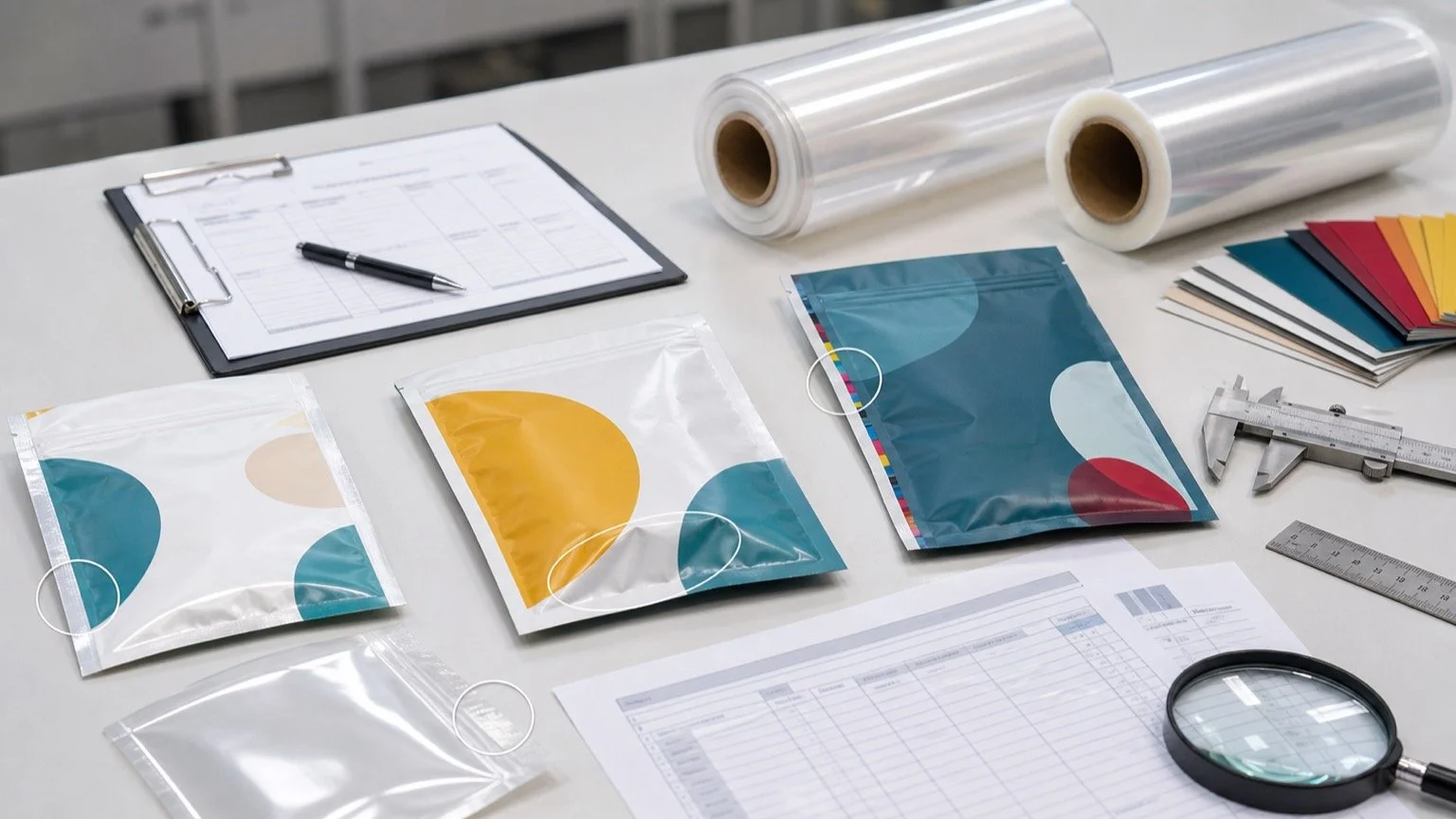
Packaging defects rarely start on the production line alone.
They often start earlier: an unclear RFQ, missing material details, loose artwork approval, no sample reference, rushed communication, or a quote that does not define the real packaging structure.
For buyers, the goal is not to become a packaging engineer overnight. The goal is to know which flexible packaging defects matter, what causes them, and what to confirm with the supplier before bulk production.
Key takeaway: most packaging defect risk is reduced before production starts, not after the goods are finished.
What Are Flexible Packaging Defects?
Flexible packaging defects are quality problems that affect the appearance, performance, packing efficiency, or shipment reliability of roll film, pouches, wrappers, bags, shrink film, or laminated packaging.
Common problems include:
Poor sealing
Film wrinkles
Color variation
Printing misregistration
Ink smudging or weak adhesion
Wrong film thickness
Poor roll winding
Incorrect roll direction
Bag size variation
Lamination issues
Weak carton packing
Barcode or artwork errors
Some defects are cosmetic. Others can cause leakage, packing machine stoppage, customer complaints, or shipment rejection.
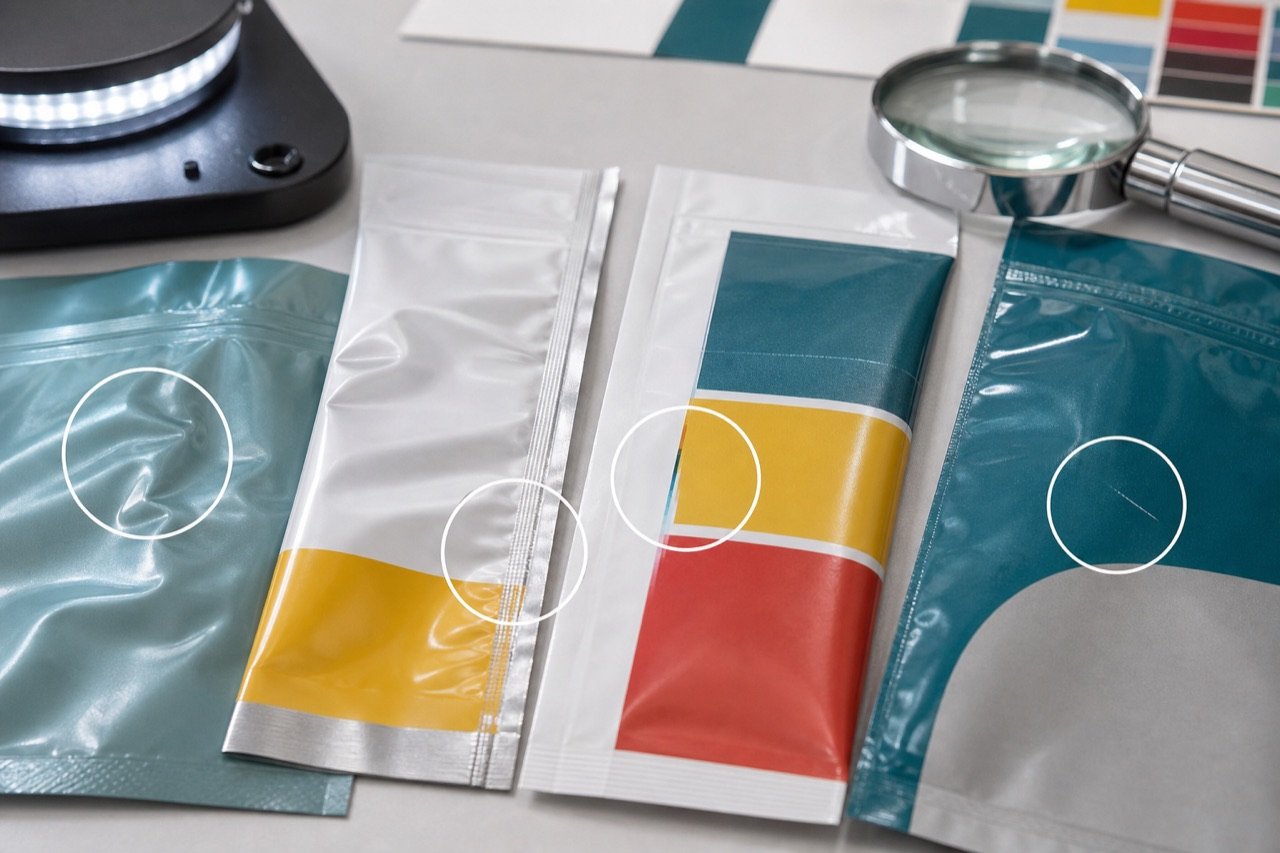
Common Flexible Packaging Defects Buyers Should Watch
1. Sealing Defects
Sealing defects are one of the most serious issues because they affect package function.
Examples include:
Weak seals
Incomplete seals
Burned seal areas
Leaking bags
Uneven sealing lines
Contamination in the seal area
Possible causes include wrong material structure, incorrect sealing conditions, poor bag-making control, product contamination, or mismatch with the buyer’s packing machine.
Buyers should confirm:
Film structure
Seal layer
Packing machine type
Sealing method
Required bag or roll film format
Sample testing before bulk production
2. Printing Defects
Printing problems can damage brand appearance quickly, especially for retail packaging.
Common printing defects include:
Color variation
Blurry text
Misregistration
Ink smearing
Uneven print density
Barcode readability problems
Artwork placed too close to sealing or cutting areas
For custom printed packaging, buyers should agree on artwork files, color references, proofing process, and sample approval before production.
3. Film Wrinkles and Poor Flatness
Wrinkles may look small, but they can affect appearance, packing speed, and sealing quality.
They may come from film tension issues, winding problems, lamination control, storage, or machine compatibility.
Buyers should ask:
Is the packaging supplied as roll film or finished bags?
What roll width and core size are required?
What winding direction is needed?
Will the film run on automatic packing equipment?
Are samples available for machine testing?
4. Wrong Size or Poor Dimension Control
A small dimension mistake can cause major trouble on a packing line.
Dimension issues may include:
Bag width too large or too small
Wrong roll width
Incorrect repeat length
Seal area mismatch
Hole, zipper, or tear notch position error
Carton quantity mismatch
The buyer should confirm final drawings, dielines, artwork, and approved samples before mass production.
5. Material Structure Mistakes
A packaging quote should not only say “PE film,” “CPP film,” or “laminated film.” Buyers need the actual structure and thickness.
Material mistakes can affect:
Sealing
Strength
Transparency
Stiffness
Barrier performance
Packing machine behavior
Product shelf presentation
6. Poor Roll Winding or Roll Direction
For automatic packing lines, roll quality matters.
Problems may include:
Loose winding
Uneven edges
Wrong roll direction
Core damage
Roll telescoping
Excessive splice issues
These problems can slow production or stop the buyer’s packing machine. Always confirm roll direction, core size, roll diameter, and machine requirements before production.
7. Weak Export Packing
Even good packaging can arrive damaged if export packing is weak.
Buyers should confirm:
Carton strength
Inner packing method
Carton quantity
Shipping marks
Pallet requirement, if needed
Moisture protection, if relevant
Photos before shipment
For international orders, packing details should be part of the quotation discussion, not an afterthought.
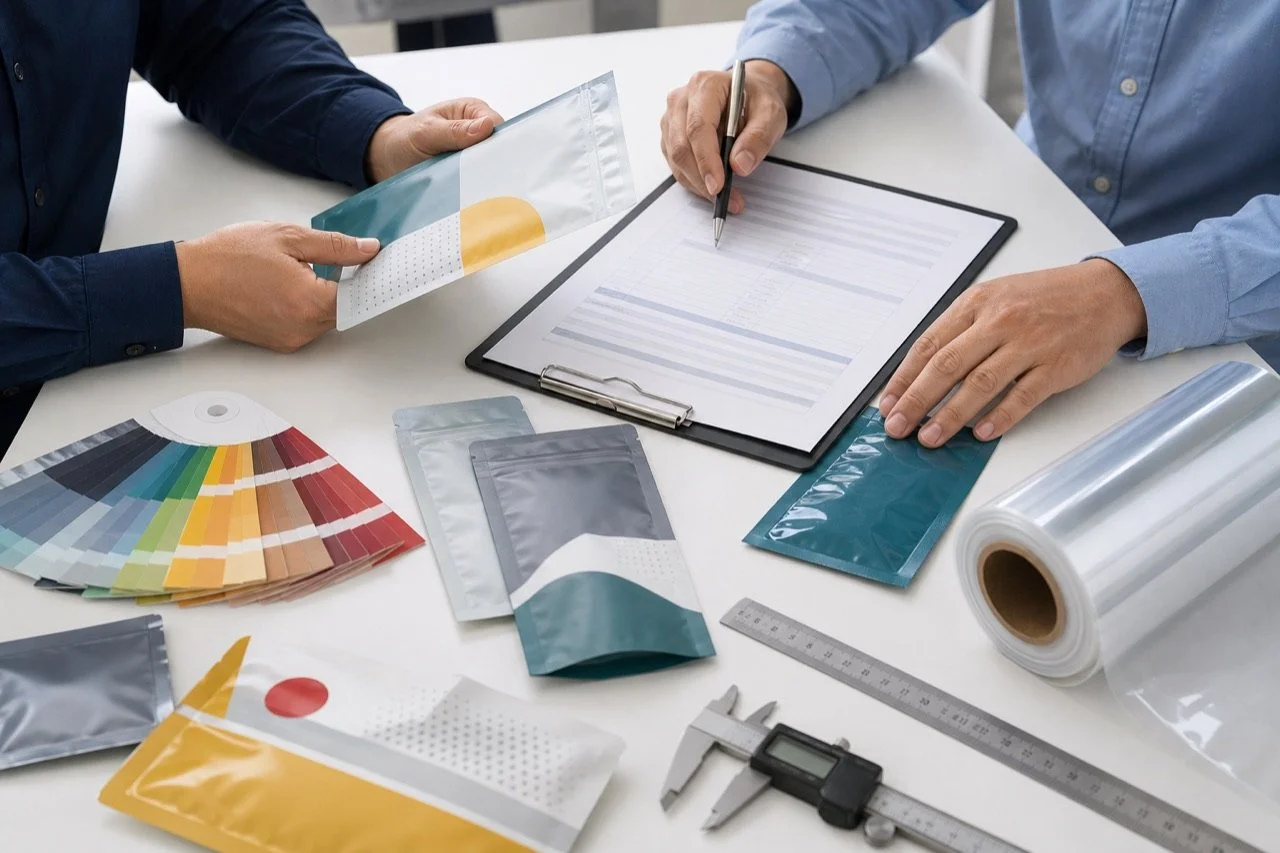
How Buyers Can Prevent Flexible Packaging Defects
Start With a Clear RFQ
A strong RFQ reduces misunderstanding.
Include:
Product type
Packaging format
Size
Material structure, if known
Thickness target
Printing colors
Artwork file
Roll direction
Packing machine details
MOQ target
Sample requirements
Destination country
Carton packing requirements
A vague RFQ leads to vague quotations.
Approve Samples Before Bulk Production
Sample approval gives both buyer and supplier a shared reference.
Check:
Film feel
Size
Thickness
Print color
Text clarity
Barcode readability
Seal area
Roll direction
Packing compatibility
Carton arrangement
Keep approved samples for reorder comparison.
Confirm Quality Control Points
Ask your supplier what they check during production and before shipment.
Useful QC points may include:
Material inspection
Printing inspection
Lamination inspection, if applicable
Slitting inspection
Bag-making inspection
Finished goods inspection
Carton packing inspection
Do not only ask, “Do you have QC?” Ask what is checked and how problems are handled.
Communicate Changes in Writing
Many defects come from small changes that were not confirmed clearly.
Confirm in writing:
Artwork changes
Size changes
Material changes
Color changes
Packing changes
Delivery changes
Label or carton mark changes
For repeat orders, confirm whether the new order should match the previous approved sample exactly.
Buyer Checklist Before Production
Before approving production, confirm:
Final artwork is approved
Size and tolerance are clear
Material structure is written in the quote
Thickness is confirmed
Printing method is confirmed
Roll direction is confirmed
Sample is approved
MOQ and lead time are clear
QC expectations are discussed
Carton packing is confirmed
Shipping marks are confirmed
Compliance documents are verified if needed
JECPACK Expert Insight
A reliable supplier should ask questions before production. If a supplier says “yes” to every request without checking film structure, artwork, machine requirements, or packing details, the buyer should slow down.
Good questions are not a delay. They are defect prevention.
Need Help Reducing Packaging Defect Risk?
We helps global B2B buyers turn packaging ideas into clearer production specifications.
For custom flexible packaging, we can help review details such as film structure, thickness, printing requirements, roll direction, sample approval, carton packing, and quotation details before production starts.
If you are sourcing printed roll film, tissue packaging, hygiene packaging, shrink film, or other flexible packaging, send us your product details, artwork, target quantity, and packing requirements. We can help you check the practical points that reduce sourcing risk.
FAQ
What are the most common flexible packaging defects?
Common defects include sealing problems, color variation, print misregistration, wrinkles, wrong size, poor roll winding, weak cartons, and material structure mistakes.
How can buyers prevent packaging defects?
Buyers can reduce risk by sending clear specifications, approving samples, confirming artwork, checking material structure, and discussing QC points before production.
Why do sealing defects happen?
Sealing defects may happen because of wrong film structure, unsuitable sealing conditions, machine mismatch, contamination, or poor bag-making control.
Should I approve samples before bulk production?
Yes. Samples help confirm material, size, print appearance, sealing area, and packing compatibility before mass production.
What should be included in a flexible packaging quote?
A useful quote should include material structure, thickness, size, printing method, color count, MOQ, lead time, sample terms, packing method, and payment terms.