
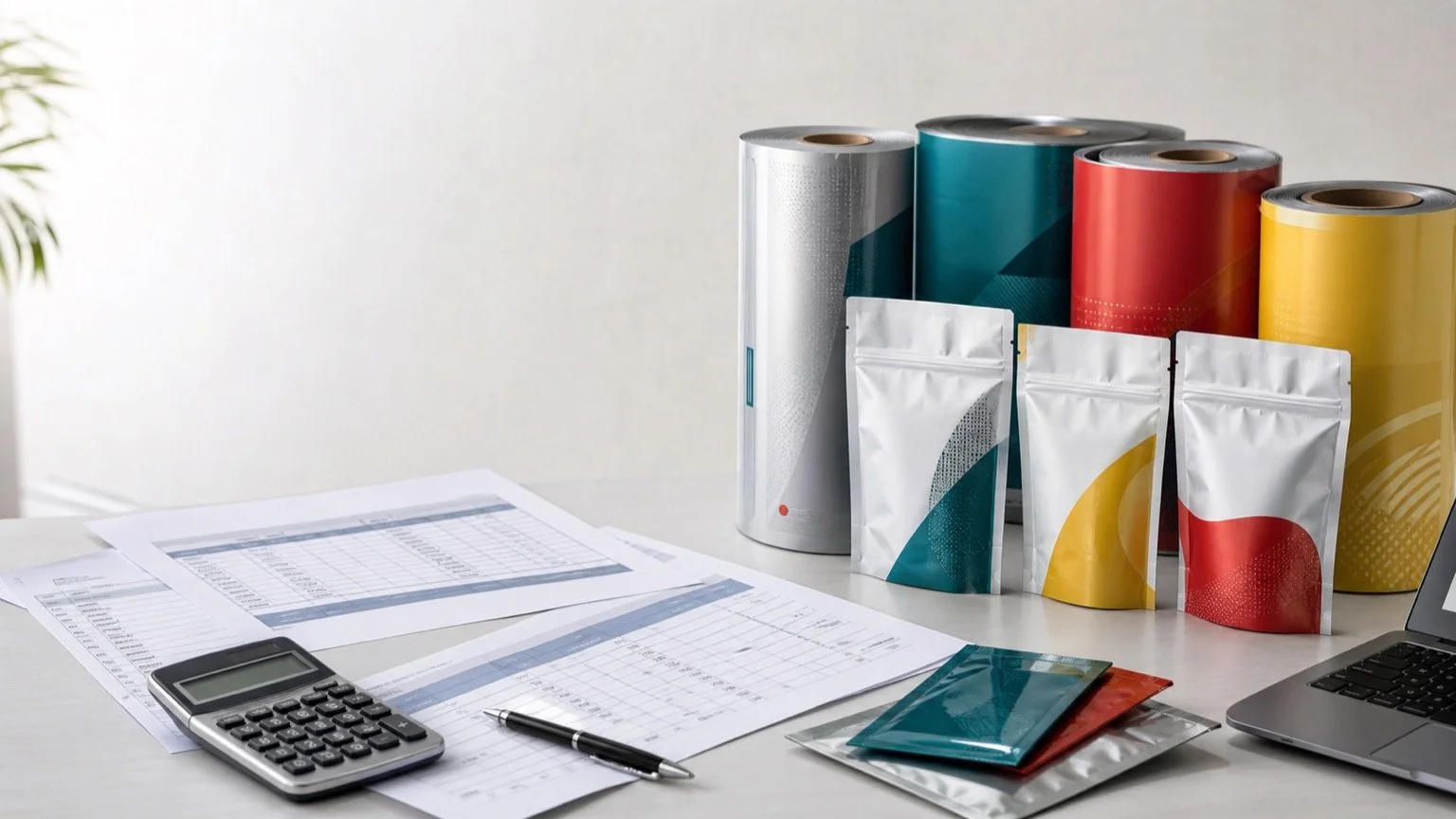
A low packaging quote is not always a better packaging quote.
For custom printed flexible packaging, two suppliers can quote the same bag size, same quantity, and same number of colors, but the final product may be very different. Material structure, film thickness, printing method, finishing, sample process, and quality control can all change the real value of the offer.
If you are comparing suppliers, the goal is not to chase the lowest number. The goal is to understand what each quote actually includes so you can reduce sourcing risk.
Why Custom Printed Flexible Packaging Quotes Vary
Custom printed flexible packaging is not a single standard product. It is built from a combination of specifications.
A quote may change based on:
Film material and structure
Thickness or grammage
Printing method
Number of print colors
Bag or roll film format
Lamination requirements
Surface finish
Order quantity
Artwork complexity
Sample requirements
Packing method
Export terms
Key takeaway: if the specifications are incomplete, the quote is not fully comparable.
You should not ask only, “What is the price?” A better question is, “What exactly is included in this price?”
Start With the Packaging Structure
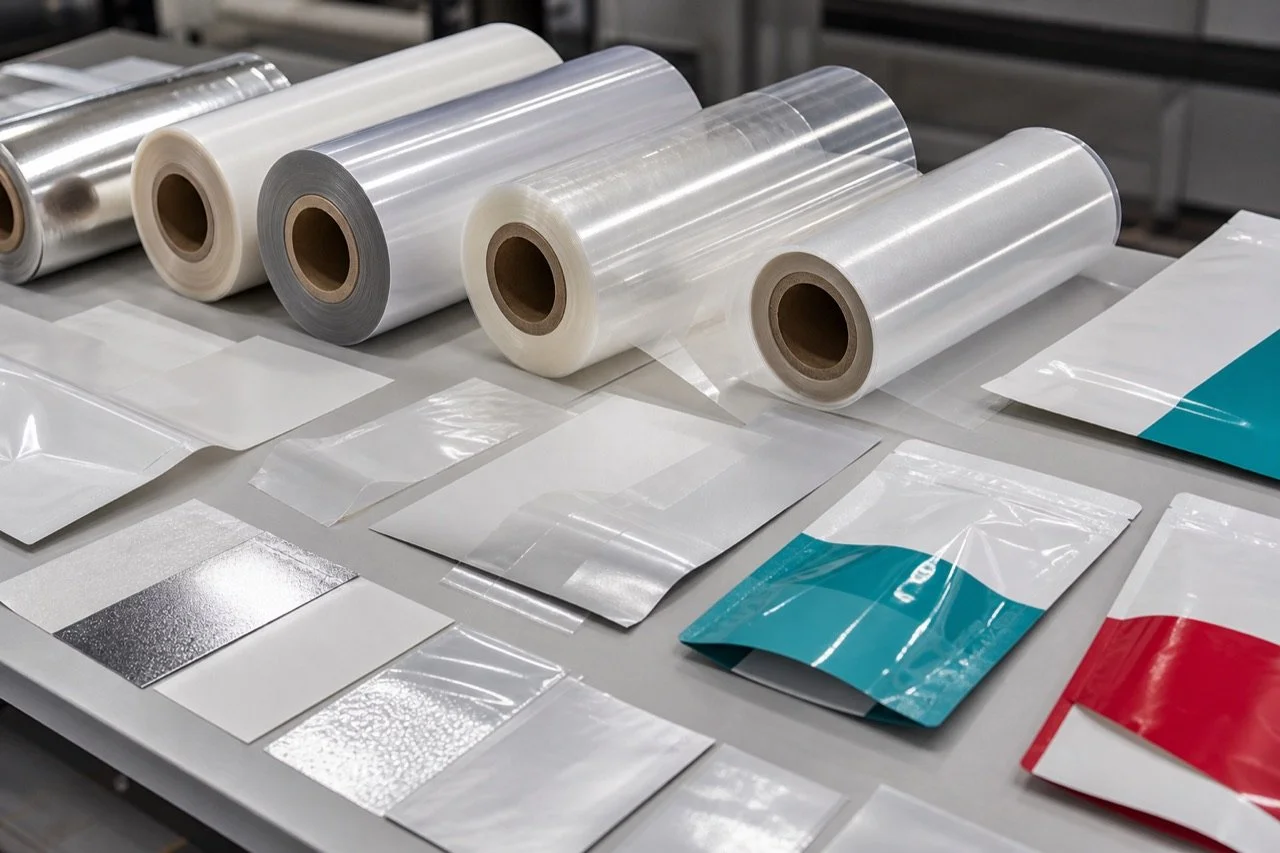
The material structure affects performance, appearance, and cost.
For flexible packaging, buyers may need to discuss:
PE film
CPP film
PET-based laminated film
BOPP-based film
Multi-layer structures
Roll film or pre-made bags
The right structure depends on the product, packing line, sealing method, storage conditions, and brand requirements.
For example, a tissue packaging buyer may care about softness, print appearance, seal performance, and machine compatibility. A food or hygiene packaging buyer may need more detailed barrier or compliance discussion.
Check Whether the Quote Includes Printing Details
Printing is one of the biggest reasons quotes differ.
Ask suppliers to confirm:
Printing method
Number of colors
Ink type, if relevant
Surface or reverse printing
Matte, gloss, or other finish
Artwork handling requirements
Color matching process
For many flexible packaging projects, gravure printing is used for consistent, high-volume printed film. Flexographic printing may also be relevant depending on order type, material, and supplier capability.
Do not assume the supplier has quoted the same printing standard unless it is written clearly.
Compare MOQ Carefully
MOQ is not only a sales policy. It is often connected to material sourcing, printing setup, cylinder or plate cost, production efficiency, and waste control.
When reviewing MOQ, ask:
Is the MOQ per design, per size, or total order?
Can multiple SKUs share the same material structure?
Are trial orders available?
Does the MOQ change after the first order?
Are printing cylinders, plates, or setup costs separate?
For small business owners, MOQ affects cash flow and inventory risk. For procurement teams, MOQ affects supplier planning and SKU management.
A useful quote should make MOQ conditions easy to understand.
Ask What Sample Approval Means
A sample is not just a nice-to-have. It is the checkpoint between artwork, material, and mass production.
Before placing an order, clarify:
Will the supplier provide a digital proof?
Will there be a physical sample?
Is the sample made by the same process as bulk production?
What can still change after sample approval?
Who signs off on color, size, material, and sealing?
Some samples are only for structure checking. Others may show print and finishing more accurately. Buyers should know which type they are receiving.
Look Beyond Unit Price
A custom printed flexible packaging quote should help you understand the total buying cost.
Review whether the quote includes:
Unit price
Tooling, cylinder, or plate charges
Sample cost
Artwork handling cost
Packing method
Carton details
Lead time
Payment terms
Incoterms
Freight estimate, if applicable
A lower unit price may not be lower after extra charges, unclear freight terms, or rework risk.

Custom Printed Flexible Packaging Quote Checklist
Before choosing a supplier, confirm these details:
Product application
Packaging format
Size and tolerance
Material structure
Thickness
Printing method
Number of colors
Surface finish
MOQ per SKU
Sample process
Bulk lead time
Packing method
Export terms
Quality inspection process
Required documents
This checklist helps both sides avoid vague assumptions.
Expert Insight: Compare Process, Not Just Price
A reliable manufacturer should be able to explain how the quote was built.
If a supplier cannot explain material selection, printing method, MOQ logic, sample steps, and quality checks, the buyer may face problems later. The supplier’s communication during quotation is often a preview of how they will communicate during production.
Jecpack positions itself as a practical flexible packaging manufacturer for global B2B buyers. That means the quotation process should support clear specifications, sample approval, and production communication instead of only sending a price.
How Procurement Teams Can Reduce Quote Risk
For established companies, packaging sourcing often involves multiple departments.
Procurement may focus on price and lead time. Marketing may focus on color and finish. Quality teams may focus on defects and consistency. Operations may focus on packing line performance.
To reduce risk, create one shared RFQ sheet before contacting suppliers. Include product use, material preference, artwork files, target quantity, expected lead time, and any required documentation.
The clearer the RFQ, the more useful the quote.
Need a Clearer Flexible Packaging Quote?
If you are comparing custom printed flexible packaging suppliers, Jecpack can help you turn a vague packaging idea into a clearer production specification. Our team can review the key details with you, including material structure, printing method, MOQ, sample approval, and quotation items, so you can compare options with less guesswork.
FAQ
Why are custom printed flexible packaging quotes so different?
Because suppliers may quote different materials, thicknesses, printing methods, MOQs, sample processes, and export terms. Buyers should compare the full specification, not only unit price.
What should I send to get an accurate quote?
Send size, packaging format, product use, material preference if known, quantity, artwork, number of colors, destination country, and any required quality or export documents.
Is the cheapest flexible packaging supplier the best choice?
Not always. A low quote can become expensive if material performance, print quality, lead time, or communication creates rework and delays.
Should I approve a sample before mass production?
Yes, where practical. Buyers should understand whether the sample represents material, size, printing, finishing, or all production details.