
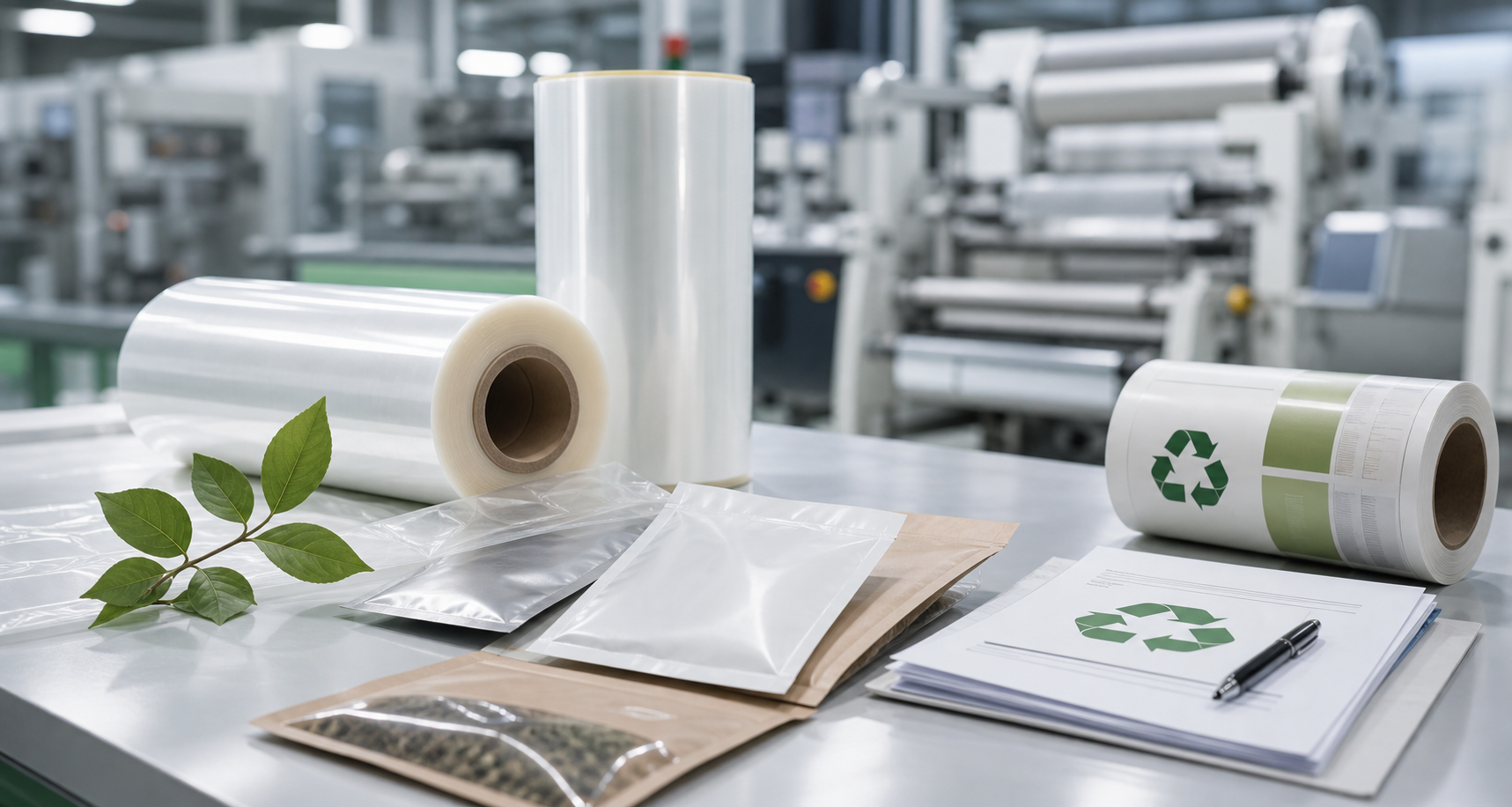
Environmental responsibility in packaging manufacturing is not a single claim. It depends on daily controls, proper equipment, waste handling, and clear management systems.
For buyers, this matters because packaging supply is not only about product quality and delivery time. It is also about choosing a supplier that manages production in a responsible and organized way.
At Jecpack, we support environmental responsibility through integrated environmental management, VOC treatment systems, thermal oxidation and heat recovery technologies, and strict hazardous waste handling through qualified third-party partners.
Environmental Management in Daily Production
Flexible packaging production can involve printing, film processing, and related manufacturing steps that need proper environmental control.
Jecpack uses an integrated environmental management approach to help monitor and manage production-related environmental responsibilities. This supports more consistent internal procedures and helps ensure that environmental requirements are handled as part of daily factory operations.
VOC Treatment With RTO Systems
VOC treatment is an important part of environmental control in some packaging production processes.
Jecpack uses RTO systems for VOC treatment. RTO stands for regenerative thermal oxidizer. It is designed to treat production exhaust by using high-temperature oxidation.
Based on current information, Jecpack’s RTO system can achieve over 98% purification efficiency.
Use only if accurate / verified: this efficiency claim should be supported by equipment documents, monitoring records, or third-party reports before publishing.
Heat Recovery and Energy Efficiency
Jecpack also uses thermal oxidation and heat recovery technologies.
Thermal oxidation supports compliant emissions treatment, while heat recovery helps reuse part of the heat generated during the process. This can improve energy efficiency in the treatment system and reduce unnecessary waste of thermal energy.
Hazardous Waste Handling
Environmental management does not stop at emissions treatment.
Jecpack handles hazardous waste through certified third-party partners. This helps ensure that regulated waste is not handled informally and that disposal follows proper procedures.
For buyers, this is one more sign that factory management is organized beyond the production line.
Why Buyers Should Care
When comparing packaging suppliers, buyers often focus on price, MOQ, material, printing quality, and lead time. Those are important.
But environmental management also deserves attention, especially for brands with supplier audits, ESG requirements, or long-term sourcing plans.
A responsible supplier should be able to explain:
How emissions are treated
How hazardous waste is handled
Whether environmental systems are documented
What claims can be verified
What product-level claims still need separate confirmation
This helps buyers make decisions based on real operating practices, not vague promises.
A Practical Note
Factory environmental management and product sustainability are related, but they are not the same.
For example, environmental treatment systems show how a factory manages production impact. But claims such as recyclable, compostable, low-carbon, or plastic-free must be verified separately for each product, material structure, and destination market.
That distinction matters.